

You found the home. The seller accepted your offer. Then the appraisal came back — and the number is lower than your purchase price. In Henrico County neighborhoods like Short Pump, Glen Allen, and Twin Hickory, where inventory moves fast and offers sometimes stretch above asking, appraisal gaps are a real and stressful part of the transaction process.
But a low appraisal is not automatically a deal-killer. Buyers and sellers each have real options, from challenging the appraisal itself to restructuring the financing, and knowing which lever to pull first can save a transaction that looked dead on arrival.
This guide walks through eight practical strategies, starting with the one that gives you the most negotiating flexibility: working with an independent mortgage broker who can access multiple wholesale lenders and help you find a path forward that a single-shelf lender simply cannot offer. Whether you are buying your first home near Dorey Park or refinancing a River Road property, read these options before you walk away from the deal.
Written by Duane Buziak, NMLS #1110647 | Coast2Coast Mortgage LLC NMLS #376205
1. Henrico Mortgage — Duane Buziak, Independent Mortgage Broker
Best for: Buyers and homeowners who need flexible financing options when a low appraisal creates an LTV or program problem.
Henrico Mortgage is an independent mortgage brokerage serving Henrico County homebuyers and homeowners since 2014, with access to a wide wholesale shelf of investors and loan programs.

Where This Tool Shines
When an appraisal comes in low, a single-shelf direct lender has one set of investor guidelines to work with. If those guidelines do not accommodate the gap, the conversation ends there. An independent broker operates differently: Duane can pivot loan programs, check appraisal waiver eligibility across multiple investors, and identify which investors allow a second appraisal under their guidelines — all within a single conversation.
Here is the other thing that matters when you are mid-transaction and stressed: Duane’s NoTouch Credit Pull process lets you explore your options without triggering a hard inquiry. In a fast-moving Henrico market — particularly in neighborhoods like Wyndham and Twin Hickory where buyers sometimes stretch above asking to compete — that flexibility is meaningful. You can assess your path forward without adding a credit ding to an already complicated situation.
Key Features
NoTouch Credit Pull: Explore financing options and restructuring scenarios without impacting your credit score during the exploration phase.
Multi-Investor Access: Access to multiple wholesale lenders and investor guidelines, not a single shelf — critical when one investor’s appraisal policy is a dead end.
Appraisal Waiver Eligibility Check: Duane can check Property Inspection Waiver (PIW) eligibility across multiple investors at the outset, before the appraisal is even ordered on a new transaction.
Loan Program Restructuring: When a low appraisal creates an LTV problem on one program, Duane can identify whether a different loan type resolves it within your financial profile.
Local Henrico Presence: Office located at 4860 Cox Rd, Glen Allen, VA 23060 — not a call center, not a national platform. Licensed in VA, FL, TN, GA, and DC.
Best For
Buyers mid-transaction in Henrico County who hit an appraisal gap and need to quickly evaluate all available paths. Also valuable for homeowners refinancing in areas like Innsbrook or Lakeside where property values can be harder to comp, and a low appraisal threatens equity access or cash-out eligibility.
Pricing
No broker fee to explore options. Compensation is disclosed per transaction. Call 804-212-8663 to discuss your specific situation.
2. Reconsideration of Value (ROV)
Best for: Buyers whose agent can identify tighter, more recent comparable sales the appraiser may have missed.
Reconsideration of Value is a formal, no-cost process where the buyer or their agent submits additional comparable sales data to the appraiser through the lender, requesting a review of the original valuation.

Where This Tool Shines
The ROV process is strongest when the appraiser used comps from outside the immediate neighborhood, missed a recent sale that supports a higher value, or applied adjustments that appear inconsistent with local market data. Your agent’s knowledge of Henrico micro-markets — the difference between a Glen Allen subdivision and a Tuckahoe corridor property, for example — can be genuinely useful here.
The Federal Housing Finance Agency has published standardized ROV guidance for GSE loans, which means there is a defined process lenders must follow on conforming conventional transactions. This is not an informal complaint — it is a documented procedure.
Key Features
No Cost: There is no fee to submit an ROV through your lender.
Same Appraiser: The original appraiser reviews the new data — no second appraisal is required or ordered.
FHFA-Standardized Process: For GSE-eligible loans, there is published federal guidance governing how lenders must handle ROV requests.
Timeline: Typically resolved within three to ten business days, which keeps the transaction on a manageable timeline.
Best For
Buyers on conventional or FHA loans where the agent has concrete, documentable comparable sales data that was not reflected in the original appraisal. Less effective when the low value reflects genuine market conditions rather than appraiser error.
Pricing
Free. No out-of-pocket cost to the buyer.
3. Second Independent Appraisal
Best for: Transactions where the first appraisal contains clear methodology errors and investor guidelines permit a second opinion.
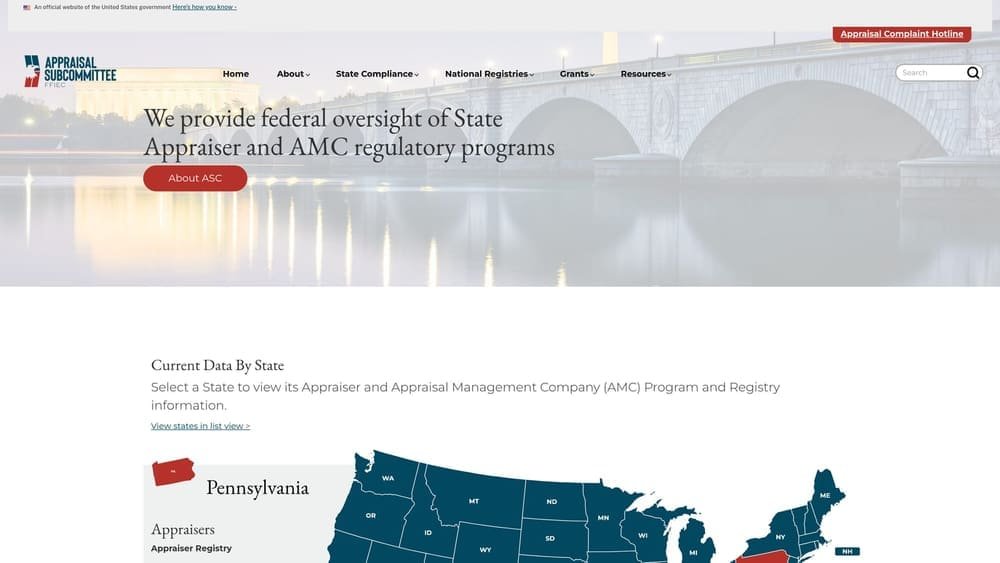
The Appraisal Subcommittee oversees the licensing and certification of appraisers in Virginia and nationally. Engaging a second licensed appraiser produces an independent, documented counter-opinion on the property’s value.
Where This Tool Shines
A second appraisal is not automatically usable in every loan transaction. Whether the lender can consider it depends on the specific investor’s guidelines. This is where broker access becomes directly relevant: Duane can identify which investors on his wholesale shelf permit a second appraisal under their underwriting guidelines, rather than assuming the first lender’s policy is the only policy in play.
This option is most powerful when the first appraisal has identifiable problems: incorrect square footage, comps pulled from a different school district, or adjustments that do not reflect Henrico County market conditions. A second opinion from a locally experienced appraiser carries more weight than a generic challenge.
Key Features
Independent Documentation: Produces a licensed professional’s counter-opinion with full methodology and comparable sales support.
Investor-Dependent Eligibility: Whether the second appraisal can be used depends on investor guidelines — a broker with multi-investor access can identify the right path.
Virginia Licensing Requirement: The appraiser must hold a Virginia license and be selected through the lender’s approved appraisal panel.
Most Useful When: The first appraisal contains demonstrable methodology errors, not simply a valuation the buyer disagrees with.
Best For
Buyers with a strong case that the first appraisal was methodologically flawed, and whose broker can identify an investor whose guidelines allow the second report to be considered in underwriting.
Pricing
Typically $400 to $600 for a standard single-family home in Henrico County. The buyer pays this out of pocket, with no guarantee the second appraisal will be usable or will come in higher.
4. Seller Price Reduction Negotiation
Best for: Buyers whose sellers have a time-sensitive move or have already demonstrated flexibility during the transaction.
A seller price reduction uses the appraised value as a neutral, third-party data point to formally request that the seller reduce the purchase price to the appraised value or closer to it.
Where This Tool Shines
The appraisal is not the buyer’s opinion — it is a licensed professional’s documented conclusion. That distinction matters in a negotiation. The seller’s agent can verify the appraised value through the lender, which removes the “buyer is just trying to renegotiate” dynamic from the conversation.
In Henrico County’s competitive sub-markets, sellers sometimes accept offers above asking specifically to move quickly. If the seller has already relocated, has a contingent purchase pending, or has been on the market longer than expected, the appraisal gap gives both parties a documented reason to revisit the price without either side losing face.
Key Features
Objective Basis: The appraised value is a licensed professional’s opinion, not a buyer’s preference — giving the buyer legitimate grounds to renegotiate.
No Buyer Cost: There is no direct cost to requesting a price reduction. The outcome depends entirely on negotiation.
Seller Verification: The seller’s agent can confirm the appraised value through the lender, which supports a good-faith conversation.
Most Effective When: The seller has a time-sensitive situation or has already shown willingness to negotiate during the transaction.
Best For
Buyers who have a motivated seller and a clean appraisal report that neither party can credibly dispute. Less effective in a multiple-offer environment where the seller has a backup buyer waiting.
Pricing
No direct cost. Outcome depends entirely on the negotiation between buyer and seller.
5. Appraisal Gap Coverage — Buyer Pays the Difference
Best for: Buyers with sufficient reserves who want to preserve the agreed purchase price and keep the deal moving.
Appraisal gap coverage means the buyer covers the dollar difference between the appraised value and the purchase price in cash, allowing the agreed price to stand while the loan proceeds based on the appraised value.
Where This Tool Shines
Here is how the math works on a real Henrico County scenario. Purchase price: $425,000. Appraised value: $410,000. Gap: $15,000. With a 10% down payment on the purchase price, the buyer originally planned to put down $42,500 and borrow $382,500. But the lender bases the loan on the appraised value. At 90% LTV on $410,000, the maximum loan is $369,000. The buyer must now cover $382,500 minus $369,000, which equals $13,500 in additional cash, on top of the original $42,500 down payment. Total cash needed: $56,000 instead of $42,500.
That is a significant jump. Before committing to gap coverage, your broker should recalculate the revised LTV, confirm the loan still qualifies under program guidelines at the new structure, and verify that your total cash-to-close remains within your documented reserves. This is not a decision to make without running the numbers first.
Key Features
Preserves the Purchase Price: Keeps the agreed price intact and avoids reopening seller negotiations.
LTV Recalculation Required: Broker must confirm the revised loan structure still qualifies under program guidelines after the gap is covered.
Reserve Check: Buyer must confirm revised cash-to-close is within documented financial reserves.
Gap Clause Alignment: If the original offer included a written appraisal gap clause, the coverage amount may already be defined in the contract.
Best For
Buyers with strong cash reserves who are highly motivated to close on a specific property and have confirmed with their broker that the revised loan structure is still sound.
Pricing
The gap amount in cash. In the example above, that is $13,500 in additional out-of-pocket funds beyond the original down payment plan.
6. Negotiated Gap Split — Buyer and Seller Share the Difference
Best for: Transactions where both parties want the deal to close but neither can absorb the full gap alone.
A negotiated gap split is a structured addendum where the seller reduces the price partway and the buyer covers the remainder, dividing the appraisal gap between both parties.
Where This Tool Shines
This is often the fastest path to a signed addendum and a clear-to-close, precisely because it asks neither party to absorb the full hit. Using the same example: a $15,000 gap on a $425,000 purchase. The seller reduces the price by $7,500 to $417,500, and the buyer covers the remaining $7,500 in cash. Both parties move forward. Neither walks away feeling like they lost the negotiation entirely.
Once the new agreed price is confirmed, the broker recalculates the loan structure from scratch. The revised purchase price changes the LTV, the down payment calculation, and potentially the PMI picture. Getting those numbers right before the addendum is signed prevents surprises at the closing table.
Key Features
Shared Burden: Neither party absorbs the full appraisal gap, which often makes agreement easier to reach.
Addendum Required: The new agreed price must be documented in a signed contract addendum before the loan can be restructured.
Loan Recalculation: Broker recalculates the full loan structure once the new price is confirmed in writing.
Goodwill Dependent: Most effective when both buyer and seller have demonstrated a genuine interest in closing the transaction.
Best For
Buyers and sellers who have a cooperative relationship and want a practical middle ground. Works well in Henrico neighborhoods like Deep Run Park and Lakeside, where sellers often have equity flexibility and buyers have some cash reserves but not enough to cover the full gap alone.
Pricing
The buyer’s negotiated share of the gap in cash. The specific amount is determined case by case through the addendum process.
7. Appraisal Waiver / Property Inspection Waiver (PIW)
Best for: Conventional loan buyers with strong down payments and credit profiles on eligible property types.
Fannie Mae’s Desktop Underwriter and Freddie Mac’s Loan Product Advisor can issue appraisal waivers on qualifying conventional loans, eliminating the traditional appraisal requirement — and therefore the low-appraisal problem — for eligible transactions.
Where This Tool Shines
This option is worth understanding before a transaction begins, not after. If a PIW is granted through automated underwriting, there is no appraisal to come in low. The valuation risk disappears entirely for that transaction. Conventional loans with 20% or more down payment have meaningfully higher waiver eligibility rates, though eligibility also depends on loan purpose, property type, and the borrower’s credit profile.
The broker advantage here is direct: Duane can check PIW eligibility across multiple investors before the appraisal is ordered, at the outset of the loan process. A single-shelf lender checks one investor’s automated system. If that system does not grant a waiver, the conversation ends. A broker can run the scenario across multiple investor overlays to find the path most likely to produce a waiver on an eligible transaction.
Key Features
Eliminates Appraisal Risk: No traditional appraisal means no low appraisal — the root problem is removed entirely for qualifying transactions.
Eligibility Factors: LTV, loan purpose, property type, and borrower credit profile all affect whether a waiver is granted.
Multi-Investor Check: A broker can check waiver eligibility across multiple investors, not just one automated underwriting system.
Conventional Loans Only: PIW / appraisal waivers are not available on FHA, VA, or USDA loans.
Best For
Buyers on conventional loans with 20% or more down, strong credit profiles, and properties that fit standard single-family residential guidelines. Most useful when identified at the pre-qualification stage, before the appraisal is ordered.
Pricing
No additional cost when granted through automated underwriting. The value is in the risk elimination, not a separate fee.
8. Walk Away Using the Appraisal Contingency
Best for: Buyers for whom no resolution is reachable and whose contract includes a properly written appraisal contingency.
The CFPB provides guidance on appraisals and buyer rights. When the contract includes a properly written appraisal contingency and no resolution is possible, the buyer can invoke the contingency in writing to exit the transaction with their earnest money protected.
Where This Tool Shines
This is the option of last resort, but it is a real and legitimate one. Virginia purchase contracts typically include an appraisal contingency by default, but the specific wording matters. The buyer must follow the exact notice and timing requirements written into the contract. Missing a deadline or failing to invoke the contingency in the required form can put earnest money at risk even when the buyer has a legitimate appraisal gap.
One important note for Henrico County buyers who competed in multiple-offer situations: some buyers waive the appraisal contingency in their original offer to make it more attractive to the seller. If the contingency was waived, this option is not available. A broker can help the buyer understand the full financing picture before making the decision to walk, including whether any of the other seven options on this list remain viable.
Key Features
Earnest Money Protection: Properly invoking the contingency per contract terms returns the earnest money to the buyer.
Contract-Dependent: Virginia purchase contracts typically include this contingency by default, but the exact wording and timing requirements govern how it must be invoked.
Contingency Waiver Risk: If the buyer waived the appraisal contingency in the original offer, this exit is not available.
Broker Consultation Value: Before walking, a broker should confirm whether any financing restructuring option remains viable — walking away from a deal has real costs beyond earnest money.
Best For
Buyers who have exhausted all negotiation and financing options, whose contract includes a properly written appraisal contingency that was not waived, and for whom the gap cannot be resolved within their financial means.
Pricing
No cost if the contingency is properly and timely invoked. Earnest money is returned to the buyer.
Which Option Is Right for Your Situation
The path forward depends on where the problem is and what resources you have available. Here is a quick framework for matching the option to the buyer.
If the appraisal may contain errors: Start with a Reconsideration of Value (Option 2). It costs nothing and uses the same appraiser. If the error is significant and documentable, a second independent appraisal (Option 3) may follow, provided your broker can identify an investor whose guidelines permit it.
If you have cash reserves: Gap coverage (Option 5) or a negotiated gap split (Option 6) are the fastest paths to closing. Run the revised numbers with your broker before committing — the LTV recalculation matters.
If you need the seller to move: A seller price reduction (Option 4) uses the appraisal as a neutral, third-party basis for renegotiation. Most effective when the seller has a time-sensitive situation.
If you are still in the pre-qualification stage: Ask about appraisal waiver eligibility (Option 7) before the appraisal is ever ordered. A broker can check PIW eligibility across multiple investors at the outset on qualifying conventional transactions.
If no resolution is reachable: The appraisal contingency (Option 8) protects your earnest money — but only if the contingency was not waived and you invoke it correctly per the contract terms.
Duane Buziak has been helping Henrico County buyers and homeowners navigate financing challenges since 2014. When an appraisal comes in low, the broker advantage is real: access to multiple wholesale lenders, the ability to check waiver eligibility and second-appraisal policies across multiple investors, and the flexibility to restructure a loan program when one path closes — all without a hard credit pull during the exploration phase.
If your appraisal just came back low and you are not sure which of these options applies to your specific transaction, call 804-212-8663 or get pre-qualified today and start with a no-credit-impact conversation about what is still possible.
One Response